Keeping Front-End Code Clean as Projects Grow
Every large website starts small. Over time features pile up, deadlines win, and the codebase becomes something nobody wants to touch. Having restructured legacy front-end code and package management on high-traffic sites, these are the habits I now apply from day one.
A structure anyone can predict
If a new developer cannot guess where a file lives, the structure is too clever. I keep one folder per concern - layout, reusable components, page sections, content data - and name files after what they render.
Section-based SCSS
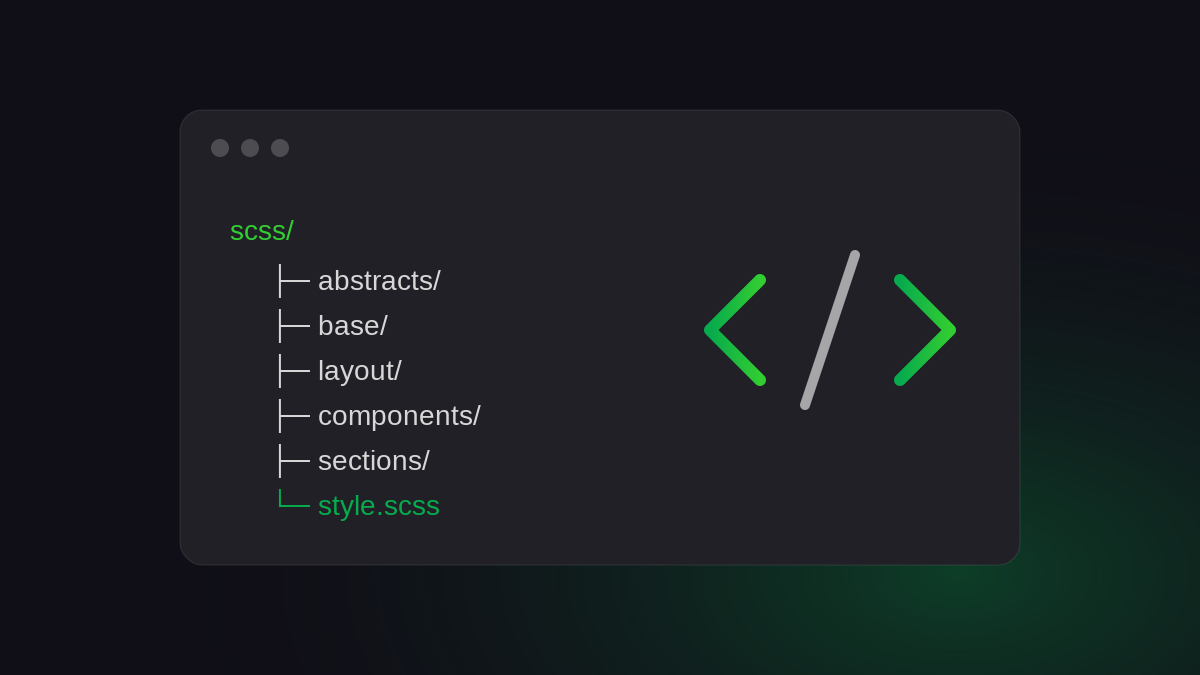
Styles mirror the markup: one partial per section, shared tokens for colour and spacing, and a single entry file that compiles everything into one stylesheet. Changing the hero never risks breaking the footer.
- abstracts - variables, colour tokens and mixins
- base - reset and typography
- layout - header, sidebar, footer
- components - buttons, cards, form controls
- sections - one partial per page section
Separate content from markup
Hard-coded text inside templates is where maintainability goes to die. Keeping content in typed data files means a copy update is a one-line change, and the components stay focused on presentation.
The best refactor is the one you never need because the structure stayed honest.
Keep the build boring
Whether it is Gulp, Webpack or a framework CLI, the build should be a single command that anyone on the team can run. Pin your Node version, commit the lockfile and document the scripts in the README - future you will be grateful.